Putting down roots
Chue and Tue build their family in Western North Carolina and continue the farming traditions they knew from Laos.
 Visit the farm
Our family · Our fortune
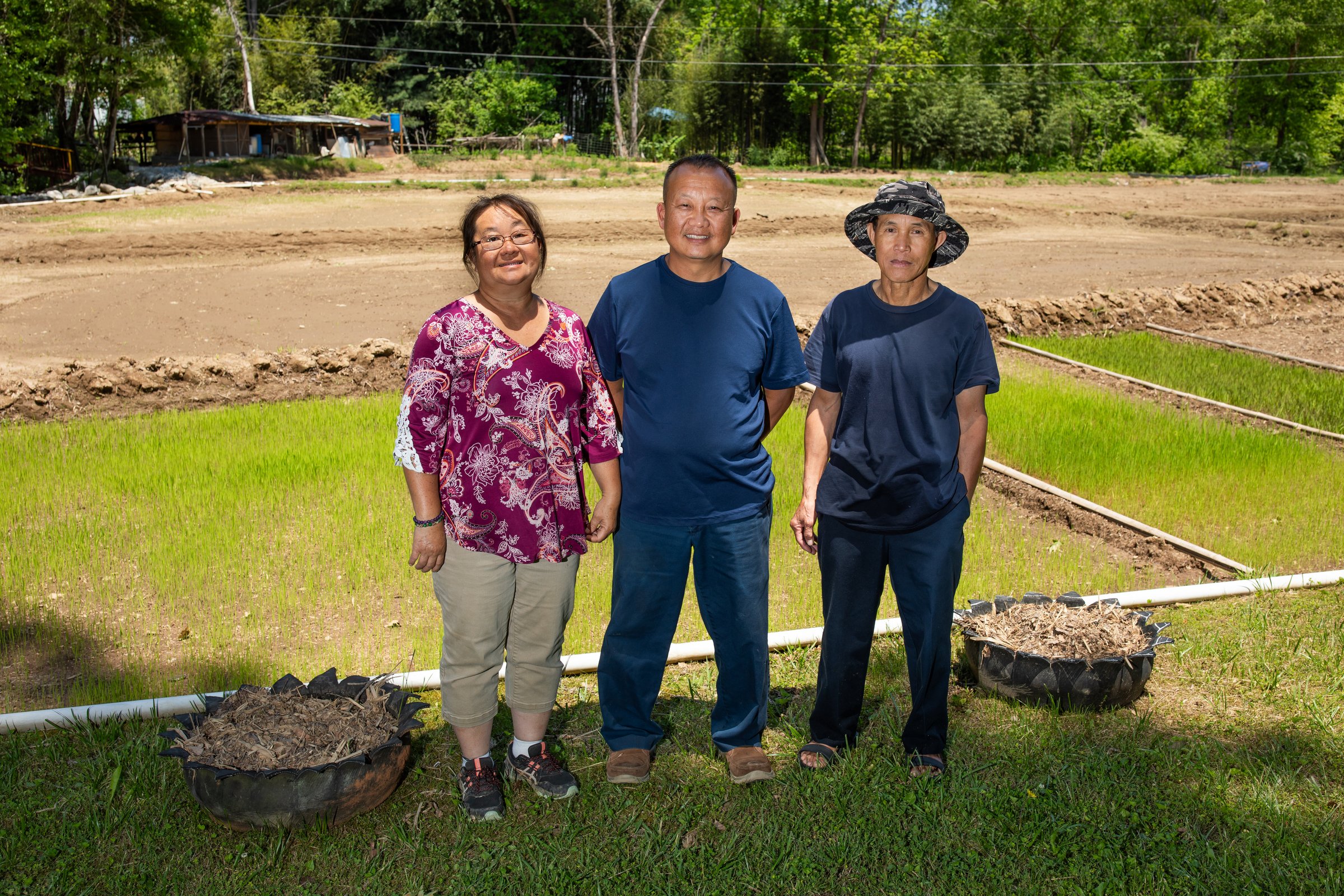
Lee’s One Fortune Farm is a Hmong family cooperative—many hands, many fields, and one shared purpose.
Where we come from
Chue and Tue Lee came to the United States as Hmong refugees from Laos. They met at a Hmong New Year celebration in California, married in 1986, and returned to Western North Carolina, where they raised six children and built a life close to the land.
The family first planted the vegetables, herbs, fruit, and rice they missed from home. What grew for family tables soon drew other Hmong families, curious neighbors, chefs, and market shoppers looking for flavors they could not find elsewhere.
In 2008, the family organized Lee’s One Fortune Farm. The name expresses how the farm works: relatives share labor, seed, knowledge, equipment, and harvest so the whole family can move forward together.
The food carries more than flavor. It carries the knowledge of elders, the memory of home, and something meaningful to pass on.
Heritage in every harvestFour chapters
Chue and Tue build their family in Western North Carolina and continue the farming traditions they knew from Laos.
The extended family forms the farm business to bring Hmong-grown produce into the local food community.
A WNC AgOptions grant helps the farm acquire a small combine, making the labor-intensive rice harvest more sustainable.
Twelve family growers cultivate food across the foothills, build relationships with markets and chefs, and teach new eaters how to enjoy the harvest.
How One Fortune works
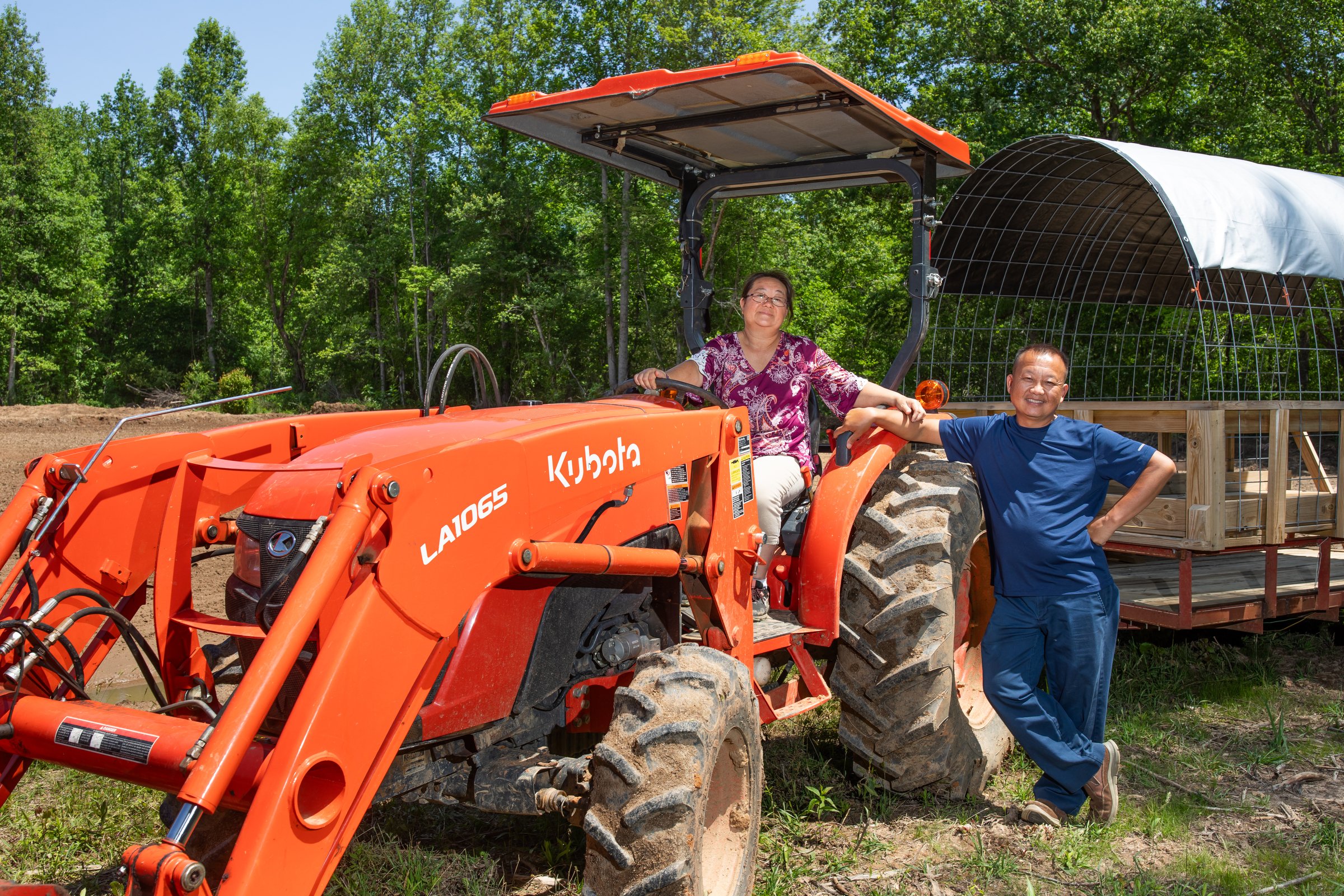
Lee’s One Fortune Farm is not one single plot. Relatives grow across several Western North Carolina counties and come together when a crop needs planting, tending, or harvesting. That traditional system of shared labor keeps knowledge moving between generations and gives elders a meaningful way to keep farming.
Follow the rice story →Go deeper
The Bitter Southerner’s deeply reported story of the family, migration, rice, and remembrance.
Read the feature ↗Meet your farmerASAP’s conversation with the family about farming, patience, culture, and growing food locally.
Read at ASAP ↗Reclaiming RuralA closer look at the shared-labor farm, its orchard, and the ingenuity behind its rice harvest.
Read the story ↗